
The Art of Crafting Tallow Balm
Tallow balm is more than just a skincare product—it’s a time-tested remedy crafted with care and intention. The process of how tallow balm is made, starts with transforming raw animal fat, called suet, into a clean, nutrient-rich fat known as tallow. This rendered tallow is then combined with oils and optional essential oils to create a balm that deeply hydrates, heals, and protects the skin.
In this guide, we’ll break down every step of the process, so whether you’re curious about how your favorite balm is made or you’re ready to try making it yourself, you’ll find all the answers here.
Step 1: Understanding Suet and Tallow
What is Suet?
Suet is the raw, hard fat found around the kidneys and loins of cows or sheep. It’s the starting point for making tallow and is prized for its high nutrient content.
- Why Grass-Fed Matters:
Grass-fed suet produces tallow that is richer in omega-3 fatty acids, conjugated linoleic acid (CLA), and fat-soluble vitamins A, D, E, and K. This makes it far superior for skincare compared to conventional suet.
- Why Grass-Fed Matters:
Step 2: Rendering the Tallow
What Does Rendering Mean?
Rendering is the process of slowly heating suet to melt it down, separate impurities, and leave behind pure, clean tallow.
How to Render Tallow at Home:
- Prepare the Suet:
- Trim any remaining meat or connective tissue from the suet. Chop it into small chunks for even melting.
- Prepare the Suet:
- Choose Your Rendering Method:
- Slow Cooker: Add suet to the slow cooker on low heat. Stir occasionally.
- Stovetop: Use a heavy-bottomed pot over low heat. It can be easy to burn the tallow, leaving a more “beefy” smell. This method is often used when making cooking tallow.
- Oven Method: Use a pot with an upper steamer, place the suet in the upper part, and let the tallow drip into the bottom of the pan at 200°F to 220°F.
- Choose Your Rendering Method:
- Strain the Tallow:
- Once the suet has melted into liquid fat, pour it through a fine-mesh strainer or cheesecloth to remove impurities.
- Strain the Tallow:
- Cool and Store:
- Allow the strained tallow to cool and solidify. Store in an airtight container at room temperature or in the refrigerator.
- Cool and Store:
Step 3: Creating the Balm
Ingredients for Tallow Balm:
- Rendered Tallow: The base of the balm.
- Carrier Oils: Olive oil, jojoba oil, or sweet almond oil help soften the balm and add additional skincare benefits.
- Essential Oils (Optional): Lavender, tea tree, or chamomile essential oils can be added for scent and therapeutic effects.
Basic Recipe for Tallow Balm:
- 2 cups rendered tallow
- 1/2 cup carrier oil
- 5–10 drops essential oil (optional)
Instructions:
- Melt the Tallow:
- Gently heat the tallow until it’s fully liquid.
- Melt the Tallow:
- Combine Ingredients:
- Stir in the carrier oil and let cool to around 100°F prior to adding in the essential oils (if using). Mix thoroughly to ensure even distribution.
- Combine Ingredients:
- Pour or Whip:
- For a smooth balm: Pour the mixture into jars and let it solidify at room temperature.
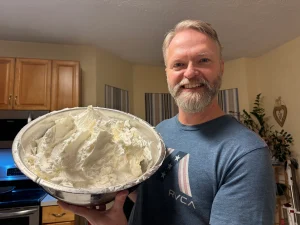
- For a fluffy balm: Allow the mixture to cool slightly, then whip with a hand or stand mixer until light and airy.
- Pour or Whip:
Step 4: Storing and Using Tallow Balm
Storage Tips:
- Store tallow balm in a cool, dry place.
- If stored properly, tallow balm can last up to a year or longer.
How to Use Tallow Balm:
- For Face: Apply a pea-sized amount and gently massage into the skin.
- For Body: Use on dry patches like elbows, knees, and heels.
- For Babies: Apply sparingly to diaper rash or dry areas.
The Benefits of Making Your Own Tallow Balm
- Customization: Tailor the ingredients to your specific skin needs.
- Cost-Effectiveness: Making your own balm is often cheaper than buying pre-made products.
- Sustainability: DIY tallow balm reduces waste and allows you to source ethical, grass-fed suet.
FAQs: Your Tallow Balm Questions Answered
1. Can I use any type of suet for tallow balm?
While you can use conventional suet, grass-fed suet offers superior skincare benefits and is more sustainable.
2. How long does it take to render tallow?
The process typically takes 3–5 hours, depending on the quantity and method used.
3. Can I make tallow balm without a carrier oil?
Yes, but the balm will be firmer and may require more effort to apply.
4. Are essential oils necessary?
No, they are optional and can be omitted for a fragrance-free balm.
Final Thoughts: The Beauty of Handcrafted Skincare
Making tallow balm is a rewarding process that combines traditional methods with modern skincare needs. By starting with high-quality, grass-fed suet and blending it with nourishing oils, you create a product that’s as effective as it is sustainable.
Want to skip the process? Try our handcrafted, ready-to-use Tallow Balm for all your skincare needs!
For a full overview of tallow balm, check out our post on What is Tallow Balm?.


