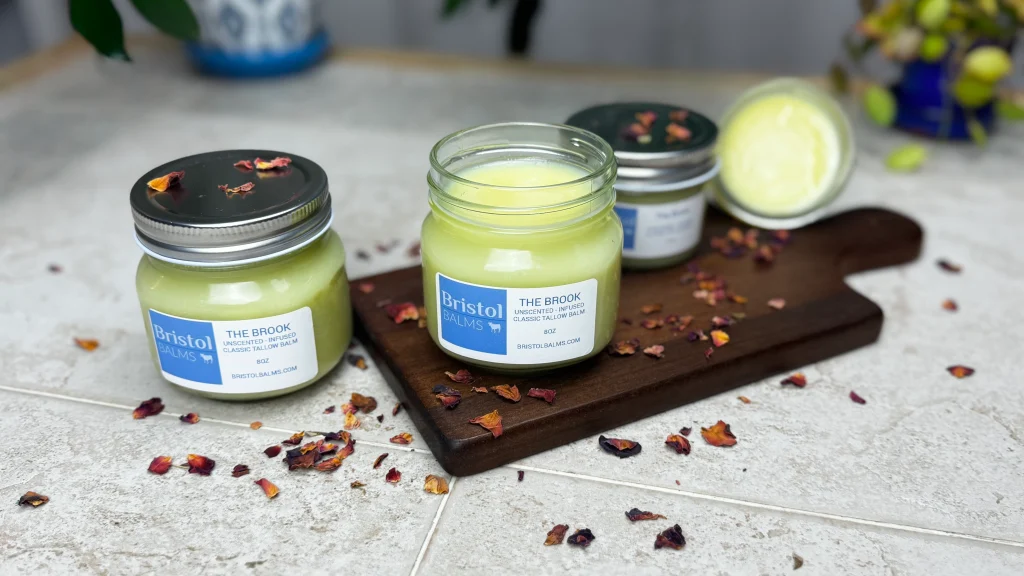
Tallow balm has earned a reputation as one of the most stable and long-lasting natural moisturizers available today. Unlike water-based lotions that require preservatives, tallow balm is oil-only and naturally resistant to oxidation, which gives it an impressive shelf life. Still yet, many desire to know, does tallow balm expire?
Still, even a tough skincare fat like tallow needs proper storage to stay fresh. This updated guide breaks down exactly how long tallow balm lasts, the latest science behind its stability, and the signs that tell you when it is time to replace your jar.
Many people want to know, how long tallow balm lasts and what factors affect its shelf life. While it is one of the most stable natural moisturizers available, proper storage and handling play a key role in preserving its quality over time.
For a deeper look at what tallow is and why it works so well, check out our full guide:
👉 What Is Tallow Balm? A Simple Guide
Being informed about tallow balm shelf life can enhance your skincare experience.
How Long Does Tallow Balm Last? (Updated 2025 Data)
Modern cosmetic formulators and lipid chemistry research confirm that properly rendered grass-fed tallow has exceptionally low oxidation rates. This is because tallow is dominated by saturated and monounsaturated fats, which resist rancidity far better than high-PUFA plant oils.
Updated shelf life ranges:
- 12–18 months at standard room temperature
- 18–30 months when stored in a cool, dark cabinet
- 2–3+ years when refrigerated or kept below 65°F
Real-world batches stored correctly often last multiple years with no signs of oxidation.
Source: The Weston A. Price Foundation notes that traditional animal fats, including beef tallow, are naturally stable and slow to oxidize.
(https://www.westonaprice.org/)
It’s important to know the long-term storage stability, especially when considering its long-term storage options.
Why Tallow Balm Lasts Longer Than Most Natural Moisturizers
One of the main reasons tallow balm has such a long shelf life comes down to its fatty acid composition. Unlike many plant-based moisturizers, tallow is naturally low in fats that oxidize quickly.
Here’s a simplified comparison of the fat profiles:
| Fat Type | Grass-Fed Tallow | Common Plant Oils |
|---|---|---|
| Saturated | 45–55% | 5–20% |
| Monounsaturated | 40–50% | 50–75% |
| Polyunsaturated (PUFA) | 1–3% | 20–60% |
Polyunsaturated fats are the most prone to oxidation and rancidity. Because tallow contains very low PUFA levels, it remains stable far longer than moisturizers made primarily from seed or nut oils.
This is one of the reasons our unscented tallow balms, The Brook and The Brook & The Bees, have such an impressive natural shelf life.
The Best Way to Store Tallow Balm for Maximum Freshness
Tallow balm is durable, but proper storage will extend its life even further.
1. Keep it cool
Heat speeds up oxidation. A bathroom drawer, cabinet, pantry, or bedside table works great.
2. Keep the lid tight
Oxygen exposure slowly breaks down fats over time.
3. Avoid water
Use clean, dry hands or a spatula. Since tallow balm contains no water, contamination only happens if water enters the jar.
4. Refrigerate for extra longevity (optional)
Refrigeration can extend shelf life to 2–3+ years with no issues.
5. Add natural antioxidants (optional)
Antioxidants slow oxidation but do not “preserve” the balm. The best options are:
- Vitamin E (tocopherol)
- Rosemary extract
These help protect your balm if you live in a warm or humid climate.
Can Tallow Balm Go Rancid? Signs to Watch For
Though highly stable, tallow can eventually oxidize. Here are the signs your balm has expired:
- A sour, waxy, or sharp smell
- A sticky, tacky, or unusually soft texture
- Darkening or odd color changes
- Visible speckling unrelated to added herbs or honey.
If your balm shows any of these signs, it is best to replace it.
Temperature Changes and Texture Shifts Are Normal
Tallow balm reacts naturally to temperature, and none of these changes mean it is spoiled.
- Warm temps: Balm softens or melts
- Cold temps: Balm becomes firmer or slightly grainy
- Whipped balms: May lose fluffiness in winter
If your whipped balm loses its airy texture, you can re-whip it for a lighter feel.
Updated FAQs: Does Tallow Balm Expire?
Does tallow balm need preservatives?
No. There is no water content, so mold and bacteria cannot grow.
Can tallow balm last several years?
Yes, especially when kept cool and stored airtight.
What if my balm melts?
It is still safe. Just stir it and keep it in a cooler place.
Do essential oils extend shelf life?
Some do. Rosemary and lavender have natural antioxidant properties.
Can I store tallow balm in the fridge?
Yes, refrigeration can stretch shelf life to over three years.
The Bottom Line: Tallow Balm Is One of the Most Stable Natural Skincare Products You Can Own
Thanks to its saturated fat profile, low PUFA content, and natural resistance to oxidation, tallow balm outperforms most plant-based moisturizers when it comes to shelf life. With simple storage habits, your tallow balm can stay fresh, safe, and effective for years.
If you are ready to explore high-quality, grass-fed tallow balms, visit our shop:
👉 Shop All Bristol Balms Products