
The Foundation of Tallow Balm
What is tallow made from? Tallow is the key ingredient in tallow balm. Unlike synthetic or heavily processed ingredients, tallow has a simple and natural origin: animal fat. Specifically, tallow comes from suet, a nutrient-dense fat found in cows and sheep, making it one of the most sustainable and effective ingredients in skincare.
In this post, we’ll break down what tallow is, where it comes from, and why grass-fed tallow is considered the gold standard for natural skincare.
What is Tallow?
The Basics of Tallow
Tallow is a rendered form of animal fat, typically sourced from cows or sheep. Rendering is the process of melting and purifying fat, which removes impurities and transforms raw suet into a smooth, odorless fat known as tallow.
Why Suet is Key
Suet is the hard, white fat located around the kidneys and loins of the animal. This type of fat is prized for its high nutrient content, making it ideal for skincare and cooking. When rendered, suet becomes tallow, a stable fat that’s rich in skin-nourishing compounds.
The Nutritional Composition of Tallow
Tallow is more than just fat—it’s a nutrient powerhouse packed with:
1. Fatty Acids
- Oleic Acid (Omega-9): Deeply hydrates and promotes skin elasticity.
- Stearic Acid: Strengthens the skin barrier and smooths texture.
- Palmitic Acid: Softens and conditions the skin.
2. Fat-Soluble Vitamins
- Vitamin A: Supports skin cell turnover and reduces fine lines.
- Vitamin D: Enhances the skin’s ability to heal and maintain its barrier.
- Vitamin E: Fights free radicals and soothes irritation.
- Vitamin K: Promotes healing and reduces discoloration.
3. Conjugated Linoleic Acid (CLA)
A natural anti-inflammatory that helps soothe conditions like eczema and psoriasis.
This unique combination of fatty acids and vitamins is what makes tallow an exceptional ingredient for skincare.
Where Does Tallow Come From?
Grass-Fed vs. Conventional Tallow
Not all tallow is created equal. The quality of tallow depends on the diet and treatment of the animal it’s sourced from.
- Grass-Fed Tallow:
- Comes from animals raised on pasture, consuming a natural diet of grass.
- Higher in omega-3 fatty acids, CLA, and vitamins.
- More sustainable and environmentally friendly.
- Conventional Tallow:
- Sourced from grain-fed animals in industrial farming operations.
- Lower nutrient content and often linked to less ethical farming practices.
Grass-fed tallow is the preferred choice for premium skincare products like Bristol Balms due to its superior nutrient profile and sustainable sourcing.
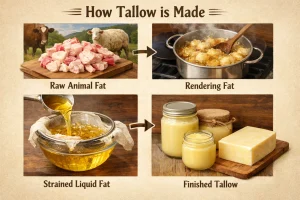
How is Tallow Made?
Step 1: Sourcing the Suet
- Suet is carefully harvested during the butchering process.
- The fat is separated from other tissues and cleaned to ensure purity.
Step 2: Rendering the Fat
- The suet is gently heated to melt the fat, a process known as rendering.
- Impurities like connective tissue and water are removed, leaving behind pure tallow.
Step 3: Purification
- The rendered tallow is strained through a fine mesh or cheesecloth to ensure smoothness and remove any remaining debris.
Step 4: Cooling and Storing
- The tallow solidifies at room temperature into a creamy, white fat that’s stable and ready for use in skincare products.
Why Tallow is a Superior Skincare Ingredient
1. Mimics Human Sebum
Tallow’s fatty acid composition closely resembles the natural oils produced by your skin, allowing it to integrate seamlessly and deeply hydrate.
2. Supports Skin Repair
The vitamins and fatty acids in tallow promote skin cell regeneration, reduce inflammation, and restore the skin barrier.
3. Naturally Long-Lasting
Unlike synthetic ingredients, tallow doesn’t require preservatives to maintain its shelf life. Properly rendered tallow can last up to a year or more without going rancid.
4. Sustainable and Zero-Waste
Tallow is a byproduct of farming, making it a zero-waste ingredient that utilizes resources that might otherwise be discarded.
FAQs: What is Tallow Made From?
1. What animals are used to make tallow?
Tallow is most commonly derived from cows and sheep. Grass-fed cows are the preferred source for skincare-grade tallow due to their nutrient-rich suet.
2. Is tallow edible?
Yes, tallow is commonly used in cooking, especially for frying and baking. However, skincare-grade tallow may include additional ingredients that make it unsuitable for consumption.
3. Why is grass-fed tallow better for skincare?
Grass-fed tallow contains higher levels of omega-3s, CLA, and vitamins A, D, E, and K, making it more nourishing for the skin than conventional tallow.
4. Does tallow have a smell?
Properly rendered tallow is nearly odorless. Any scent in tallow balm typically comes from added essential oils.
Conclusion: Simple, Natural, and Effective
Tallow is a pure and nutrient-rich fat that forms the foundation of tallow balm. Sourced from suet and rendered into a clean, stable fat, tallow is packed with skin-nourishing fatty acids and vitamins that make it a superior ingredient for natural skincare.
Want to experience the benefits of grass-fed tallow for yourself? Explore our collection of handcrafted tallow balms today and discover the power of this simple, natural ingredient.
To learn more about tallow balm’s history, benefits, and uses, visit our main post: What is Tallow Balm.


